

Sri Lankan scholars learn from First Nations Australians ahead of NAIDOC Week
Posted: 6 July 2026
Ahead of NAIDOC Week 2026 (5–12 July), Australia Awards scholars from Sri Lanka have been learning first-hand about Australia’s First Nations peoples. NAIDOC Week is an annual celebration of the cultures, histories and achievements of Aboriginal and Torres Strait Islander peoples.
Sri Lankan scholar Kargen Rajaratnam, together with 10 other scholars, travelled to South Australia’s Ikara-Flinders Ranges National Park from 22 to 25 May to learn about the Adnyamathanha people under the guidance of John Solar, a Yura man and Adnyamathanha cultural educator. (Read more about Kargen’s own reflection on the experience here.)
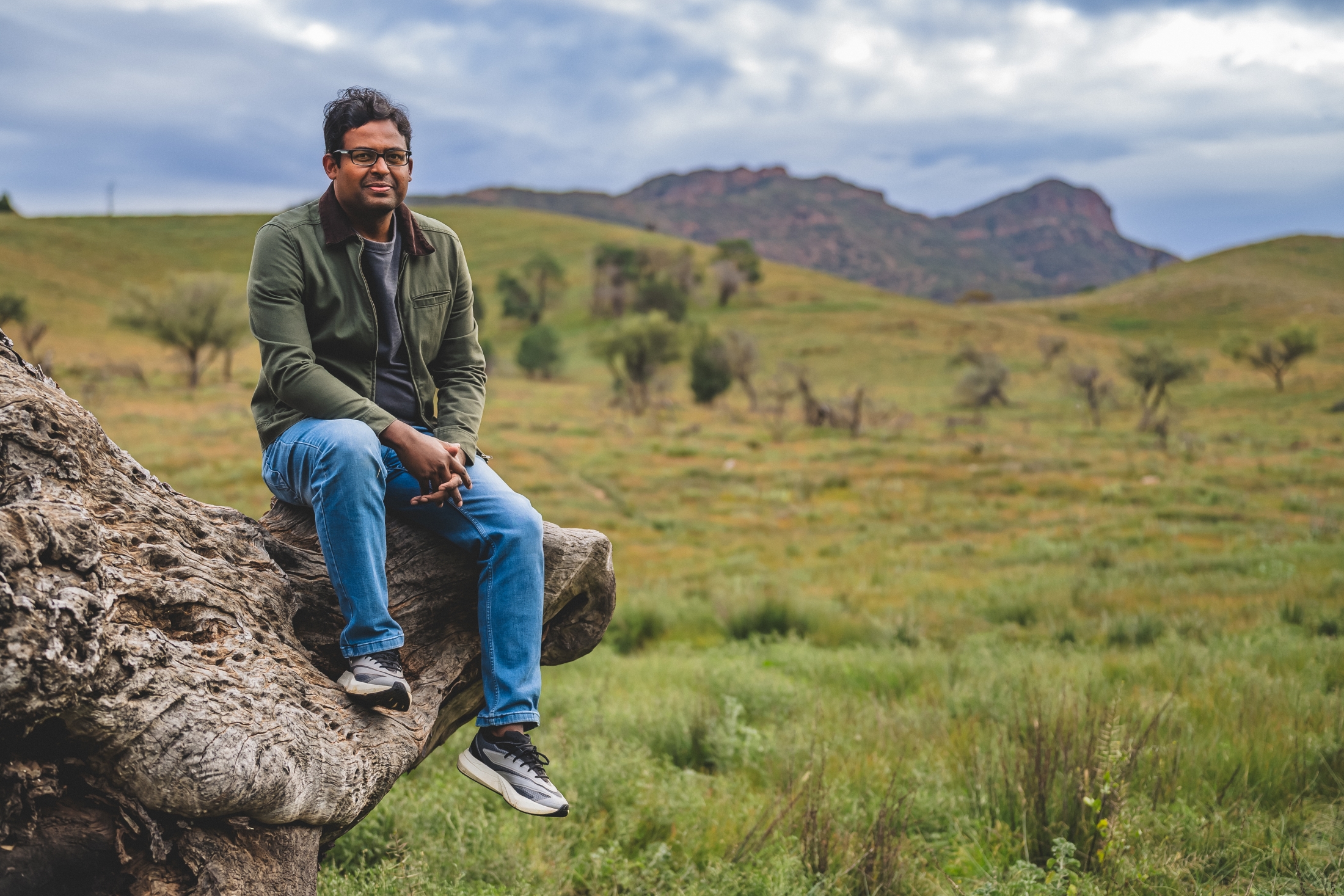
Kargen in the Ikara-Flinders Ranges National Park
During their time on Adnyamathanha Country, John shared Yura Muda (creation stories), spoke in language, and highlighted plants that Adnyamathanha people used for medicine, ceremony and food. Activities included hiking to Akurra Adnya (Arkaroo Rock), one of the most culturally significant and sacred Adnyamathanha rock art sites; making fire; cooking damper; and looking for native animals, including Andu (yellow-footed rock-wallabies) and witchetty grubs—the English name of which derives from the Adnyamathanha word witjuri.
For Kargen, hearing about traditional land management practices and the impact of colonisation was insightful. “My visit to Adnyamathanha Country was a deeply reflective experience that changed the way I think about land, decision-making and the long-term impact of human actions on the environment,” he says. “One of the most significant lessons I took from this journey was understanding how land-use decisions made decades ago can continue to shape the future of communities and ecosystems.”
This lesson is one that he will apply in his home country. “As someone involved in public sector work,” he says, “this experience encouraged me to think more critically about how policies and decisions affect communities and natural resources. Leadership is not only about achieving immediate outcomes; it is about making responsible decisions that create sustainable benefits over time.”
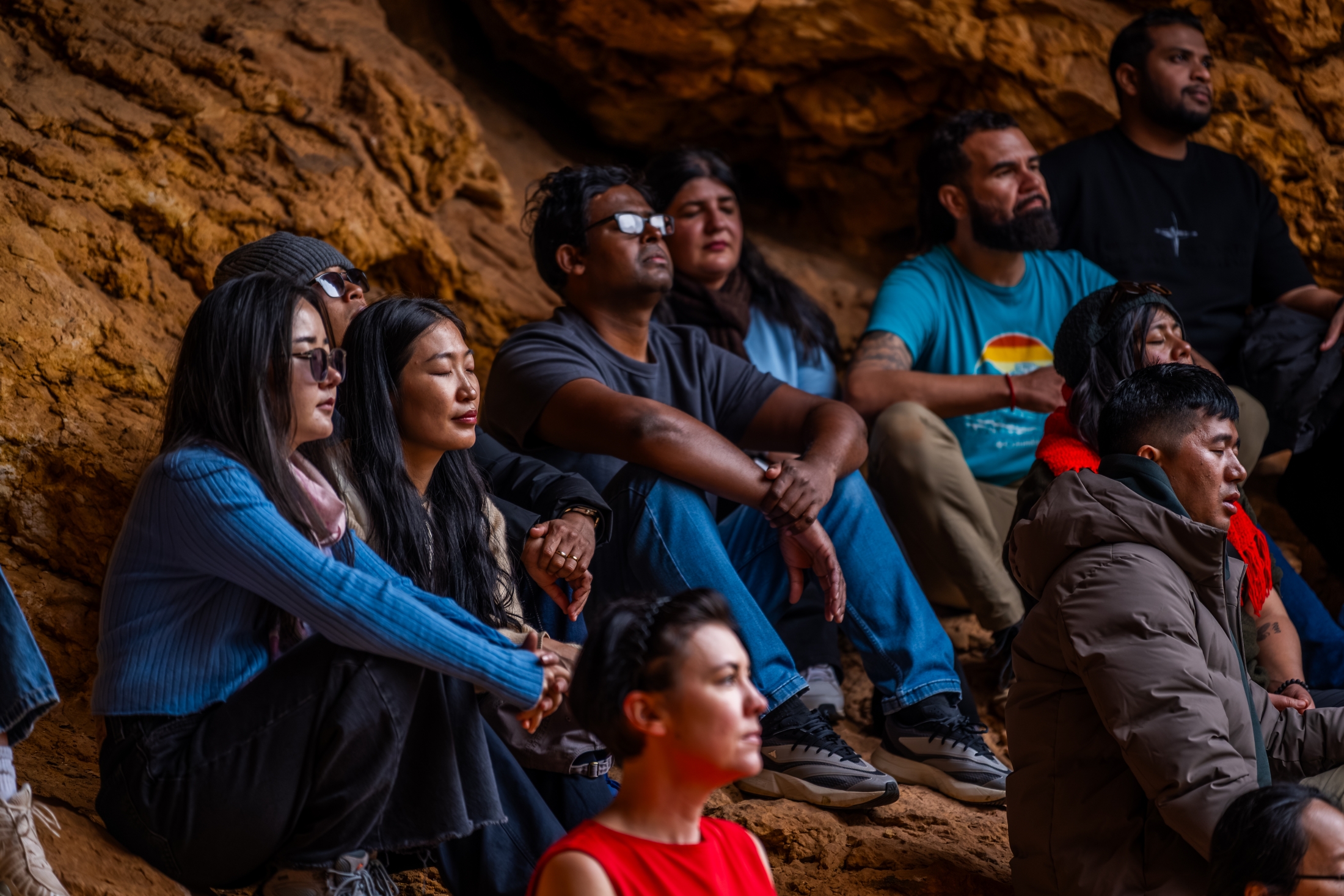
Kargen participates in a reflective exercise led by John (with beard in light blue tshirt) with other participants in the tour.
In June, five Australia Awards scholars from Sri Lanka took part in two weaving workshops facilitated by Ronnie Jordan, a Pitta Pitta Wangkamahdla woman, weaver, painter and cultural facilitator. Before the workshops, scholars received weaving materials so they could follow Ronnie’s guidance and create their own pieces during the sessions.
The workshops introduced scholars to weaving as a cultural practice connected to Country, storytelling, identity and community. Ronnie explained that weaving is not only an art form, but also a way of carrying knowledge, strengthening relationships and supporting wellbeing.
Scholars learnt how natural fibres are selected, prepared and used, and how cultural practices are guided by seasonal and environmental knowledge. Ronnie also shared examples of woven tools such as fish traps, baskets and nets, showing how creativity, function and sustainability are closely linked.
Participants then practised simple weaving techniques, with Ronnie encouraging them to focus on patience, breathing and the learning process. The sessions provided a meaningful opportunity for scholars to learn about First Nations cultures through creative practice and respectful engagement.
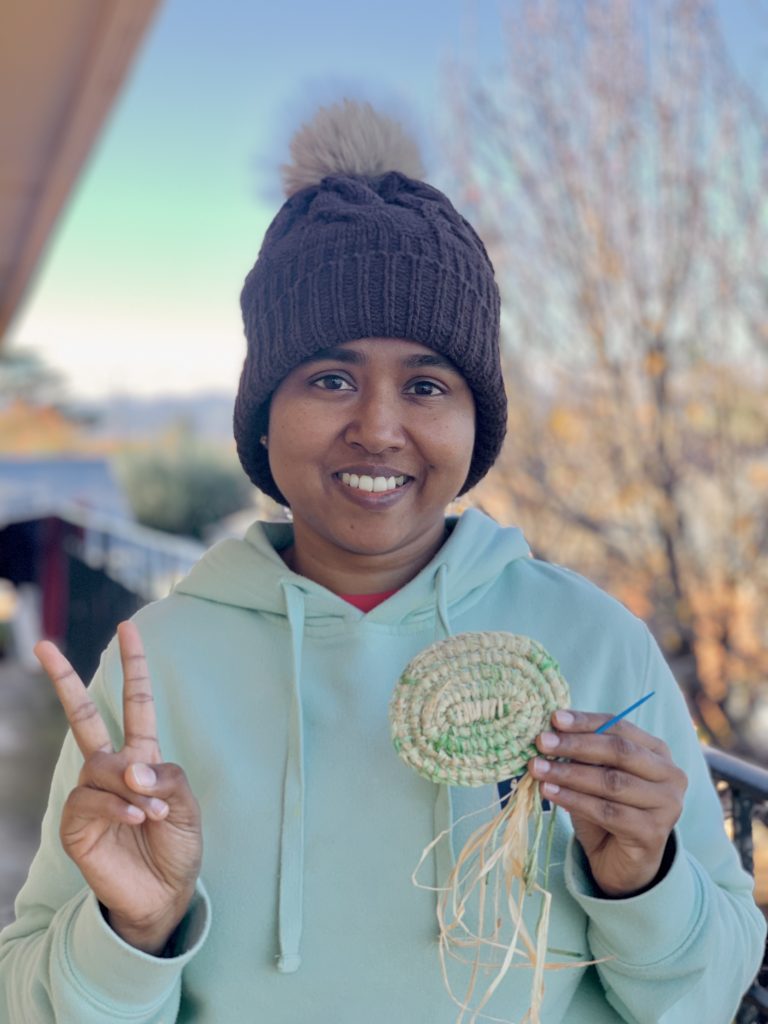
Dhananjani shows her progress following the weaving workshop.
For Sri Lankan scholar Dhananjani Rathnayaka Mudiyanseage, the weaving workshop offered a welcome opportunity to reflect and learn from Ronnie about Indigenous cultural practices. “It was a wonderful opportunity to step away from study stress and enjoy a creative, hands-on experience,” she says. “The workshop reminded me of the joy I found in crochet and cross-stitching years ago. Ronnie’s warm guidance made the experience both relaxing and inspiring.”
For Sri Lankan scholar Kirithikka Baheratha, the workshop challenged her expectations. “At first, I thought the weaving was complicated and I may not be able to do it. But when I started, I felt like it was something familiar to me, even though this was my first experience,” she says. “This weaving was more than a skill, it was therapeutic to engage in this session.”
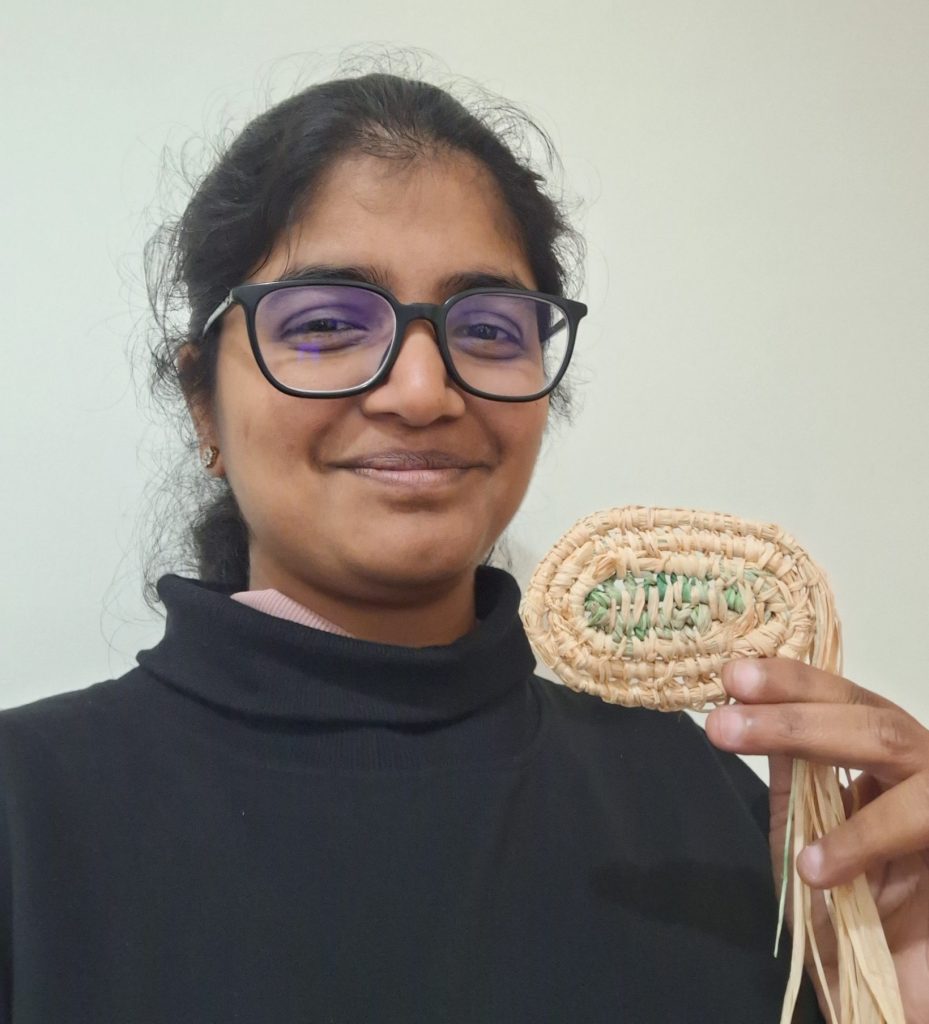
Kirithikka shows her handiwork following the weaving workshop.
Also in June, Sri Lankan scholars joined others from South Asia and Mongolia in an Aboriginal Cultural Connection Workshop. The two-hour session, which was hosted by the North & West Melbourne Neighbourhood Centre in collaboration with Yarn Strong Sista, offered the scholars the chance to learn about Aboriginal culture through storytelling, conversation and creative activities in a welcoming community environment.
The workshop concluded with a hands-on ochre-inspired art activity guided by artist Annette Sax, a proud Taungurung woman from the Eastern Kulin Nation. Annette encouraged the scholars to be creative with natural materials while sharing their own cultural identity stories.
Collectively, these experiences gave the scholars practical and reflective ways to engage with First Nations Australians and learn about their cultures and knowledge systems. As NAIDOC Week approaches, their reflections highlight how cultural learning can deepen respect and create connections across countries and communities.