

Alumna transforming technology education in Sri Lanka through leadership and system innovation
Posted: 30 October 2026
This year marks the 75th anniversary of Australian Government scholarships for students from the Asia-Pacific region, with the first scholarship recipients travelling to Australia under the Colombo Plan in 1951. To commemorate this significant milestone, Australia Awards – South Asia & Mongolia launched the Alumni Impact Storytelling Competition to celebrate the outstanding contributions alumni have made to the development of their countries.
The competition invited alumni to showcase the impact they have created and reflect on how their Australia Awards experience has helped shape their personal and professional journeys.
Sri Lankan alumna Gayathri Kasunthika Kanakaratne’s submission was recognised in the ‘commended’ category of the competition for its thoughtful reflection on how Australia Awards has shaped her leadership journey and contribution to education reform. Gayathri completed a Master of Information Technology (specialising in Artificial Intelligence) at the University of Western Australia in 2025.
Through a compelling narrative, Gayathri traces her path from education administrator to a leader driving innovation in technology education, highlighting the role of artificial intelligence, teacher development and policy reform in preparing Sri Lankan students for the future. The story demonstrates how Australia Awards learning, professional networks and leadership opportunities have translated into tangible impact across schools and education systems, supporting more innovative and future-focused learning environments.
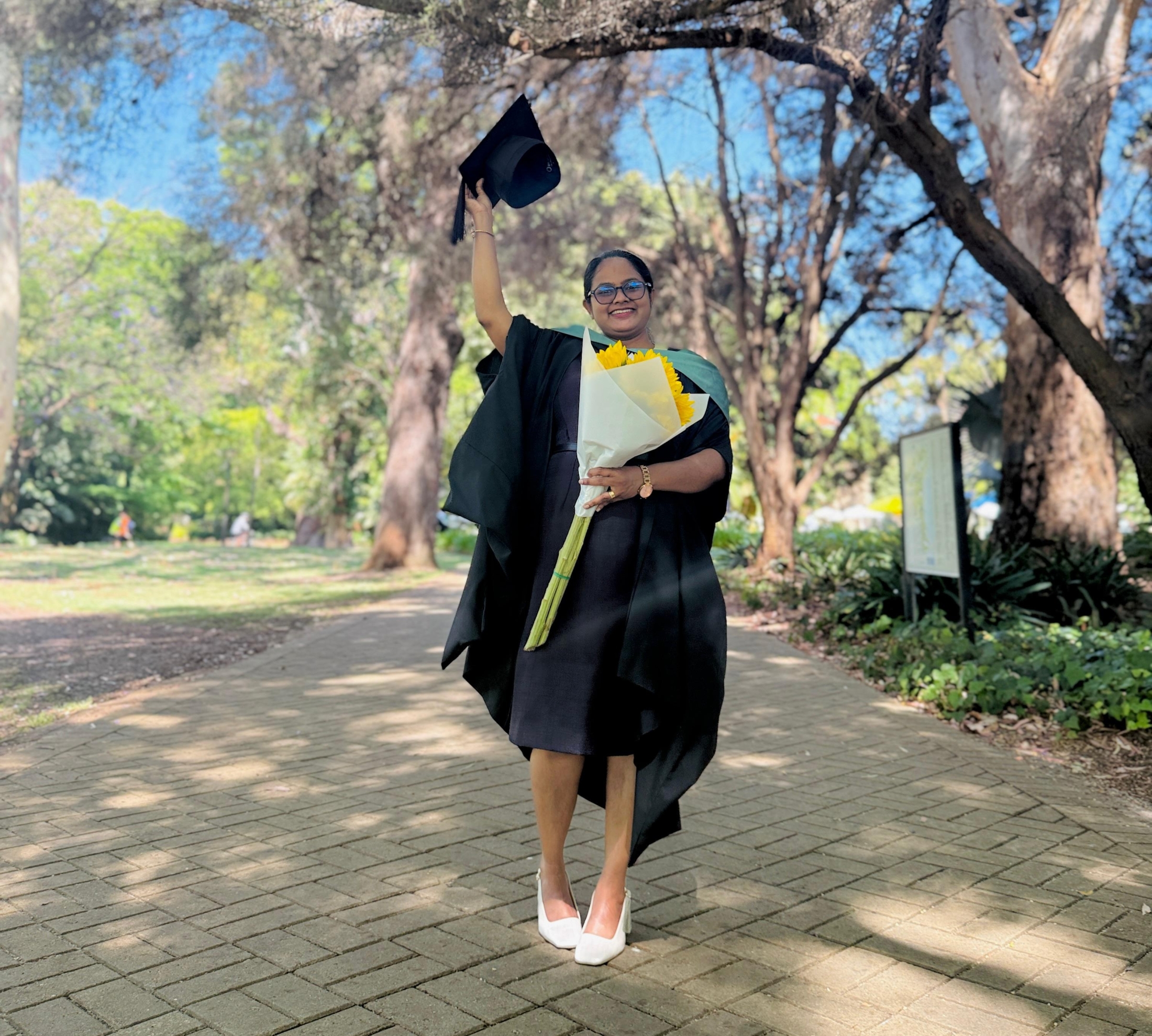
Gayathri photographed on her graduation day in Australia.
There are moments in life that do not simply change what you do; they transform how you think, how you lead and how you contribute. For me, that moment was receiving the Australia Awards Scholarship.
Looking back, I can say with clarity that my journey from an engineer working within Sri Lanka’s education system to a leader driving innovation in technology education was made possible because of that opportunity. Not partially, not indirectly, but fundamentally, as the turning point that reshaped my professional path and expanded my capacity to influence systems.
Before receiving the Scholarship, I was already serving in the Sri Lanka Education Administrative Service, with a strong foundation in electronic engineering and education administration. I was deeply committed to improving the quality of education and had actively contributed to implementation and program delivery within the system.
Yet I carried a growing awareness of limitations. I could contribute within the system, but I was not yet positioned to transform it.
I recognised a critical gap in Sri Lanka’s education landscape. While students performed well in examinations, many lacked practical, technical and problem-solving skills required for a rapidly evolving, technology-driven world. I understood the challenge clearly, but I also recognised that addressing it required more than local experience. It required global exposure, advanced knowledge and a shift in perspective.
That opportunity became a reality through Australia Awards. My master’s degree in information technology at the University of Western Australia, specialising in Artificial Intelligence, was not simply an academic pursuit. It was a transformative experience. I was exposed to innovative learning environments, interdisciplinary approaches and real-world applications of technology in education.
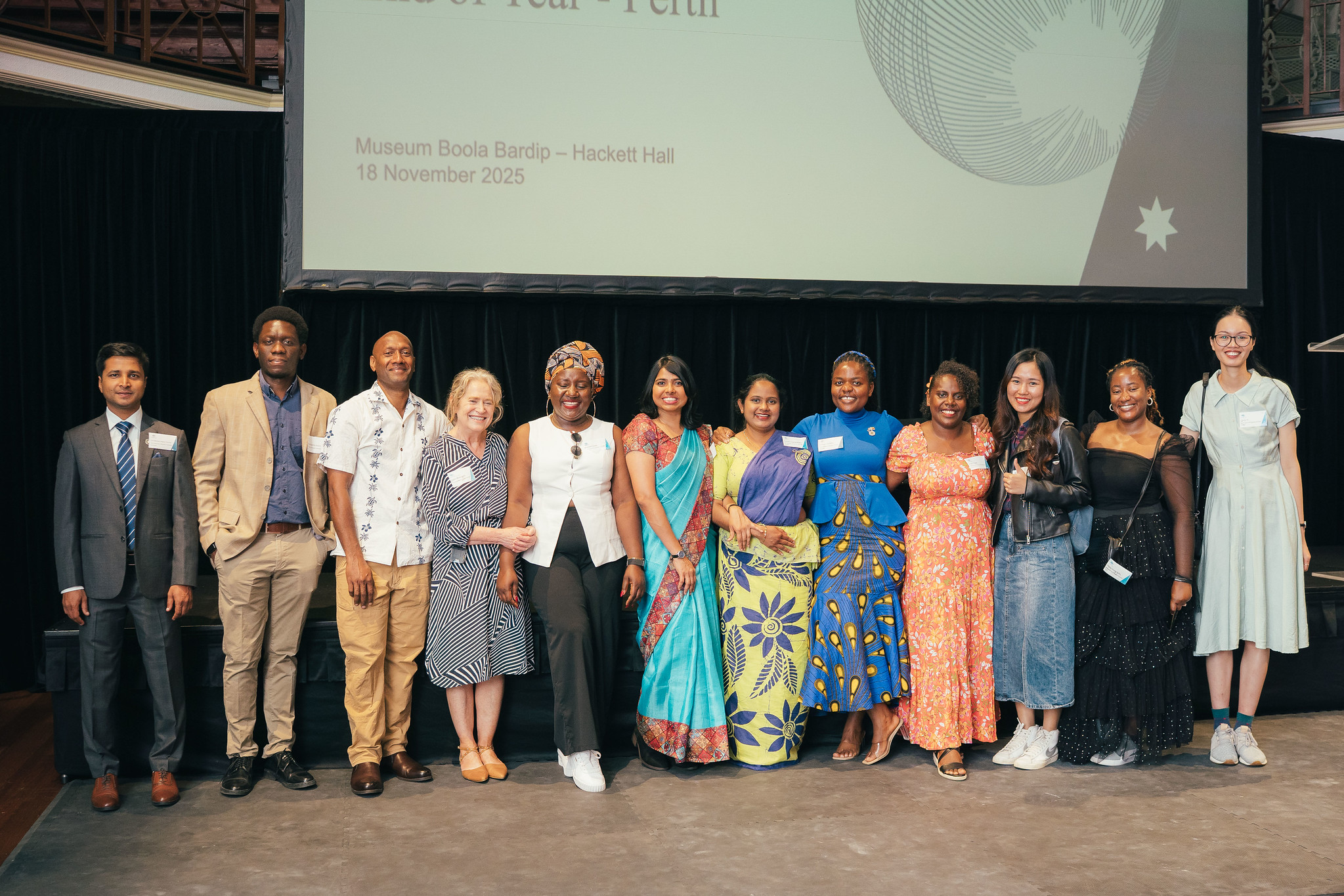
Gayathri (middle in yellow saree) pictured with other scholars from across regions at the 2025 Australia Awards End of Year event.
More importantly, I began to question systems. I came to understand that education is not just about knowledge delivery; it is about designing meaningful learning experiences that prepare students for uncertainty, innovation and lifelong learning. This shift in thinking became the foundation of my work upon returning to Sri Lanka.
The Australia Awards Scholarship did more than just enhance my qualifications. It reshaped my mindset, strengthened my confidence and expanded my vision.
When I returned to Sri Lanka, I returned with purpose. I began translating my learning into action by contributing to the transformation of technology education at a national level. One of my most significant contributions has been the introduction and expansion of innovation laboratories in schools. These labs have created dynamic learning environments where students engage in robotics, coding and invention-based activities, shifting education from passive learning to active exploration.
However, infrastructure alone does not create change. Recognising this, I led and supported teacher capacity development programs to equip educators with the skills and confidence to deliver modern technical subjects such as Engineering Technology and Design and Technology. By aligning these programs with international frameworks, we ensured that teaching practices are globally informed while locally relevant.
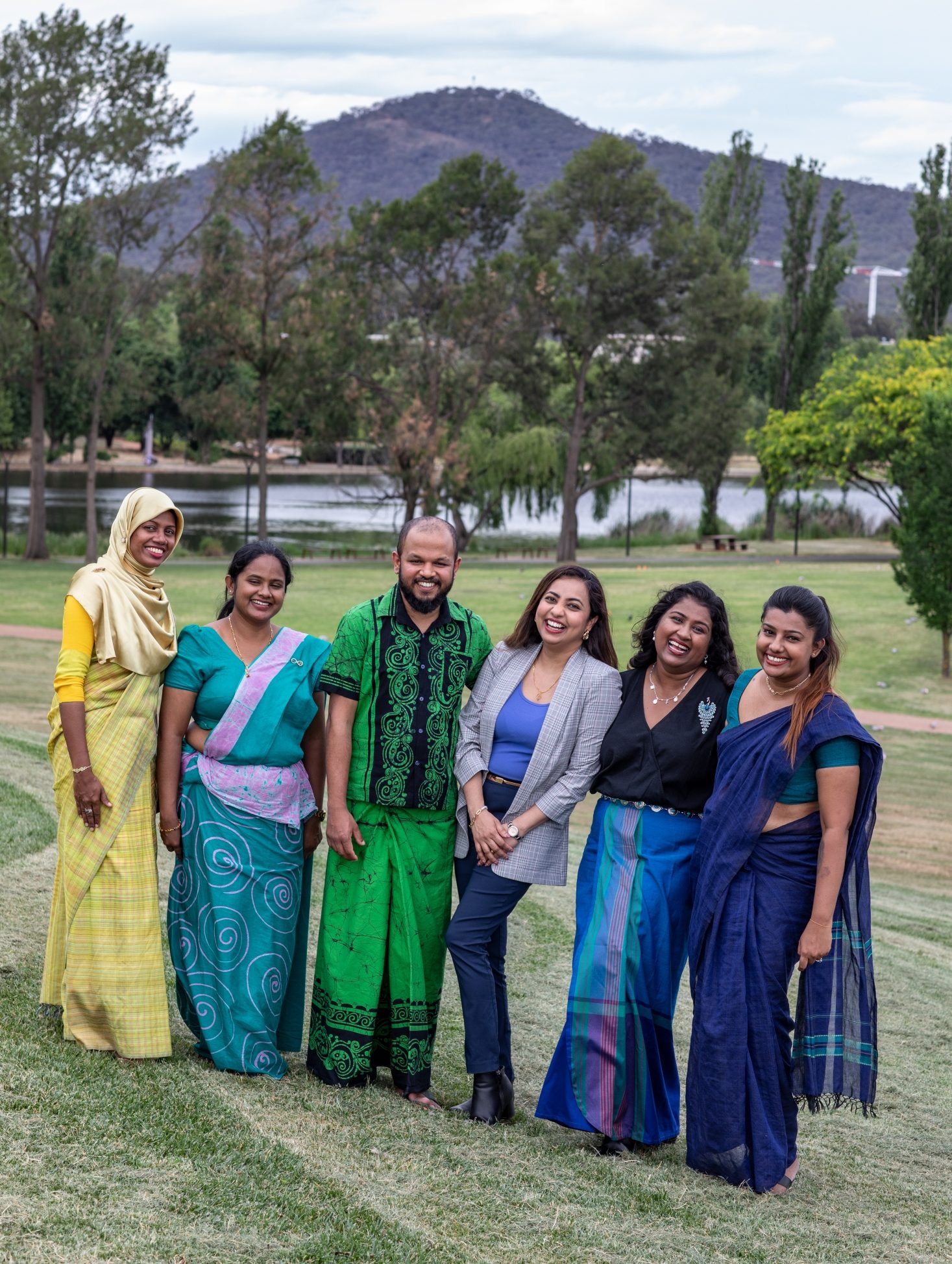
Gayathri (second from left) pictured with other scholars from Sri Lanka at the 2024 Scholars Forum in Canberra.
At the policy level, I contributed to the development of subject standards and benchmarks for newly introduced technology streams. This work ensured that reforms were not fragmented but strategically aligned with national education priorities and global trends. I have also been actively involved in monitoring and evaluation processes to strengthen the quality of implementation across schools.
Beyond systems and policy, I focused on students. Through organising and supporting national robotics and innovation competitions, I helped create platforms where students could apply their knowledge, collaborate and develop creative solutions to real-world problems. These experiences are gradually shifting student mindsets from examination-focused learning to innovation-driven thinking.
Today, the impact of these efforts is blooming in classrooms, schools and communities. While this transformation is ongoing, it reflects a meaningful shift within the system.
The role of Australia Awards in shaping this impact extends far beyond academic learning. During and after my Scholarship, I actively engaged in professional development opportunities that further strengthened my capacity as a leader. I was honoured to be recognised as a Gold-level scholar through the Scholar Champions Program by Australia Awards – South Asia & Mongolia, acknowledging my commitment to continuous professional engagement and impact.
In 2024, I was selected to participate in the Scholars Forum in Canberra, a global forum focused on gender equity. This experience broadened my understanding of inclusive leadership and reinforced the importance of ensuring equitable access and participation within education systems.

Gayathri (second from left) photographed with Sarah Storey, (fourth from right) First Assistant Secretary of the South and Central Asia Division, DFAT, and other Sri Lankan scholars at the 2024 Scholars Forum in Canberra.
I also completed specialised courses on climate change and carbon footprint through Curtin University, as well as leadership development programs through the University of Sydney. These experiences expanded my perspective on sustainability and leadership, enabling me to integrate global priorities into my work in Sri Lanka.
In addition, I had the opportunity to present at the 2025 Scholars Symposium in Perth, where I shared insights on education, innovation and system transformation. Engaging with an international audience allowed me to both contribute to and learn from global discussions on the future of education.
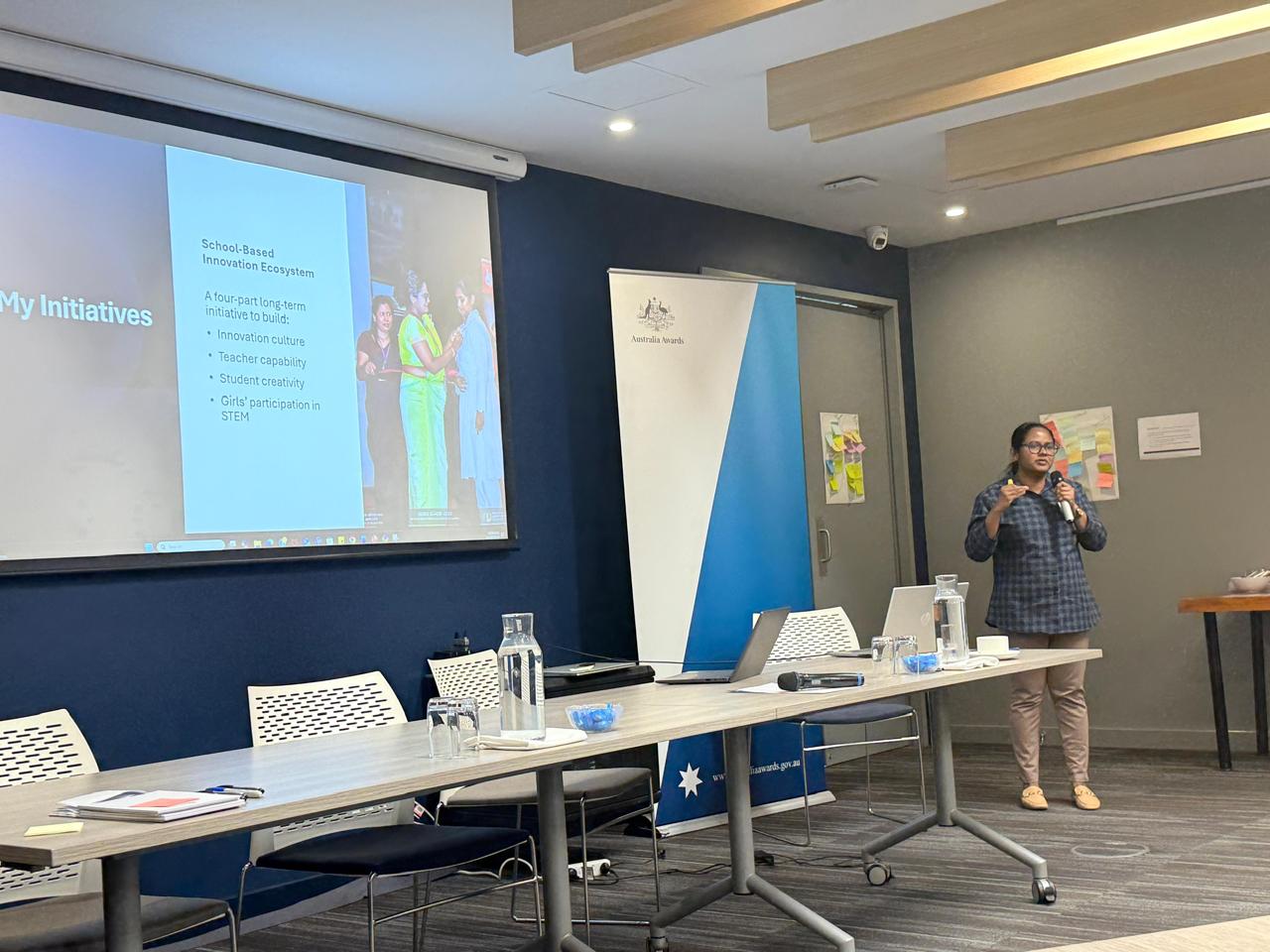
Gayathri presenting school innovation ecosystems and system transformation at the 2025 Scholar Symposium in Perth.
These experiences were not isolated achievements; they were extensions of the Australia Awards journey. They strengthened my ability to think critically, lead effectively and contribute meaningfully to national development. None of this would have been possible without Australia Awards.
The Scholarship provided not only academic knowledge, but also a platform for growth, a network of global professionals and the confidence to challenge existing systems. It enabled me to transition from working within structures to influencing them. It shaped not only what I do, but how I think, how I lead and how I serve.
My journey is not yet complete. I continue to contribute to education reform in Sri Lanka, with a focus on integrating emerging technologies, strengthening teacher capacity and preparing students for the future. I remain committed to building an education system that is innovative, inclusive and responsive to global challenges.
When I reflect on my journey, one truth stands above all others: Australia Awards was not just an opportunity; it was the foundation of transformation. And that transformation continues through every policy I help shape, every teacher I support and every student who is empowered to think beyond the classroom.