Alumna aims to contribute to social security policy reforms in Sri Lanka
Posted: 3 March 2026
Harshika Weeraratne from Sri Lanka completed a Master of Master of Social Policy at the University of Melbourne in 2025 with the support of an Australia Awards Scholarship. She serves in Sri Lanka’s administrative service as Assistant Municipal Commissioner at the Kandy Municipal Council.
Harshika was featured as the ‘face’ of the Australia Awards promotions in Sri Lanka for study commencing in 2027. We recently caught up with her to ask about her Scholarship journey, how it has affected her personal and career growth, and what advice she has for prospective applicants.
Why did you apply for an Australia Awards Scholarship?
I have been serving as an executive officer in Sri Lanka’s public service for about 13 years and a major part of this tenure has been spent in grassroots-level organisations, such as divisional secretaries and municipal councils. Accordingly, I consider myself an interface through which government policy initiatives transfer into the community. Most importantly, we grassroots-level government officers can experience the true expectations of the community, and can contribute effectively in communicating these true community needs to the policy-formulating levels of government.
While working in this intermediary role, I witnessed the importance of understanding the background of the policy formulation process in the central government and how grassroots-level government officers can contribute in communicating true community developmental requirements. My specialised area of interest in community development is social security, and I have experienced how the current social security system in Sri Lanka fails to deliver sustainable social transformation. As Assistant Municipal Commissioner in Kandy, which is the second most economically active city in Sri Lanka, the gaps in the current social security initiatives of the central government were particularly evident during the pandemic season, which was followed by economic crisis and political instability.
I recognised the inadequate contribution of the local government authorities towards social welfare and wanted to introduce a new approach towards sustainable and inclusive social security. As the local government authority, Kandy Municipal Council has enough financial and infrastructure facilities, including human resources, to intervene in uplifting the social standards of city dwellers, but I identified that we lacked proper knowledge in designing such an initiative. Accordingly, I began researching the ways that I could improve my capacity, particularly in the field of social security, and identified that I should gain specialised knowledge in this field of social policy. In terms of capacity building, the Australia Awards Scholarship came to mind as the most suitable approach, since Australia has been known as one of the most famous destinations for higher education. I also have had the opportunity of working with two Australia Awards Scholarship alumni as my direct supervisors and I have experienced their uniqueness in conduct, analytical thinking and leadership qualities. All these factors motivated me to apply for this Scholarship.
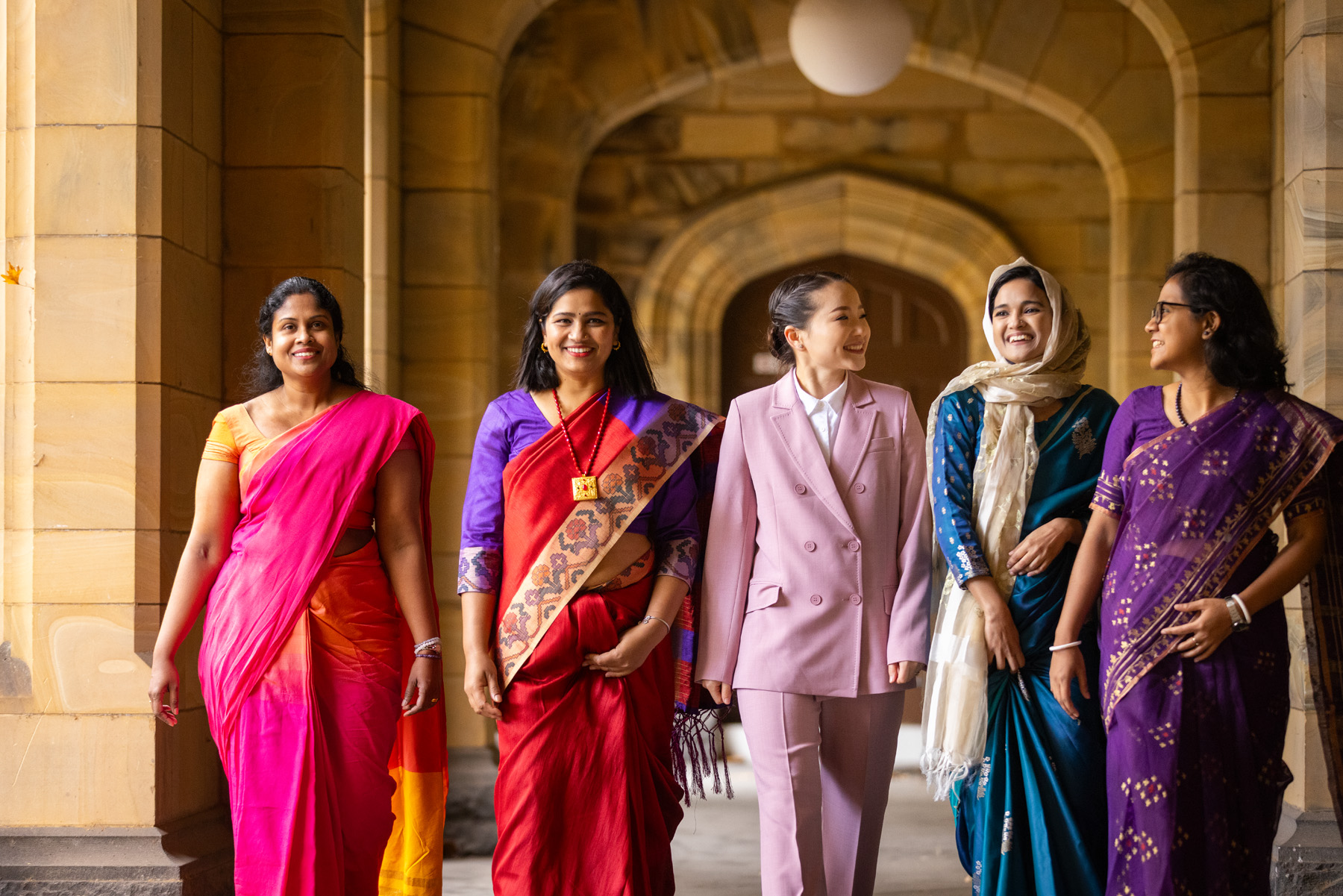
Harshika (left) with other Australia Awards scholars from South Asia and Mongolia in Melbourne.
How did your Australia Awards Scholarship contribute to your personal and professional growth?
My Australia Awards Scholarship significantly advanced my personal and professional growth by giving me a chance to immerse myself in global expertise and practical experiences. During the study period at the University of Melbourne, I had the opportunity to communicate and exchange ideas with world class experts in the field of social policy and community development. This broadened my knowledge of social welfare and inclusiveness. In particular, I used this opportunity to network with experts to gain knowledge in conducting social research and deriving conclusions relating to true community developmental requirements. Moreover, I had the golden opportunity to intern at Noble Park Community Centre for a period of 3 months, and this enabled me to gain hands-on experience in community engagement in formulating policy frameworks at the grassroots level.
In terms of my personal life, I gained the opportunity to experience life in a country which has one of the world’s most diverse societies. My family and I successfully adapted to the Australian lifestyle, and we were warmly welcomed beyond cultural barriers by Australian society. I personally improved my communication skills and leadership skills, particularly during the internship period, which has advanced my professionalism. Now I have a proper understanding of when to speak and when to be silent in a professional environment!
University aside, what was your life in Australia like?
Life outside the university offered me a vibrant mix of community immersion, cultural exploration and skill-building activities, especially during the internship period. This emphasised the importance of work–life balance, inclusivity and personal independence.
In particular, balancing studies, work and daily routine required better organising and time management skills. However, the support infrastructure, such as afterschool care facilities and child-care subsidies, eased adaptation for scholars like me without any difficulty.
Interacting with the wider Australian community showed me family values, fairness and the importance of volunteering to bring about cohesion in a diverse community. There are a lot of common programs and events, which create a welcoming feeling among newcomers to the community.
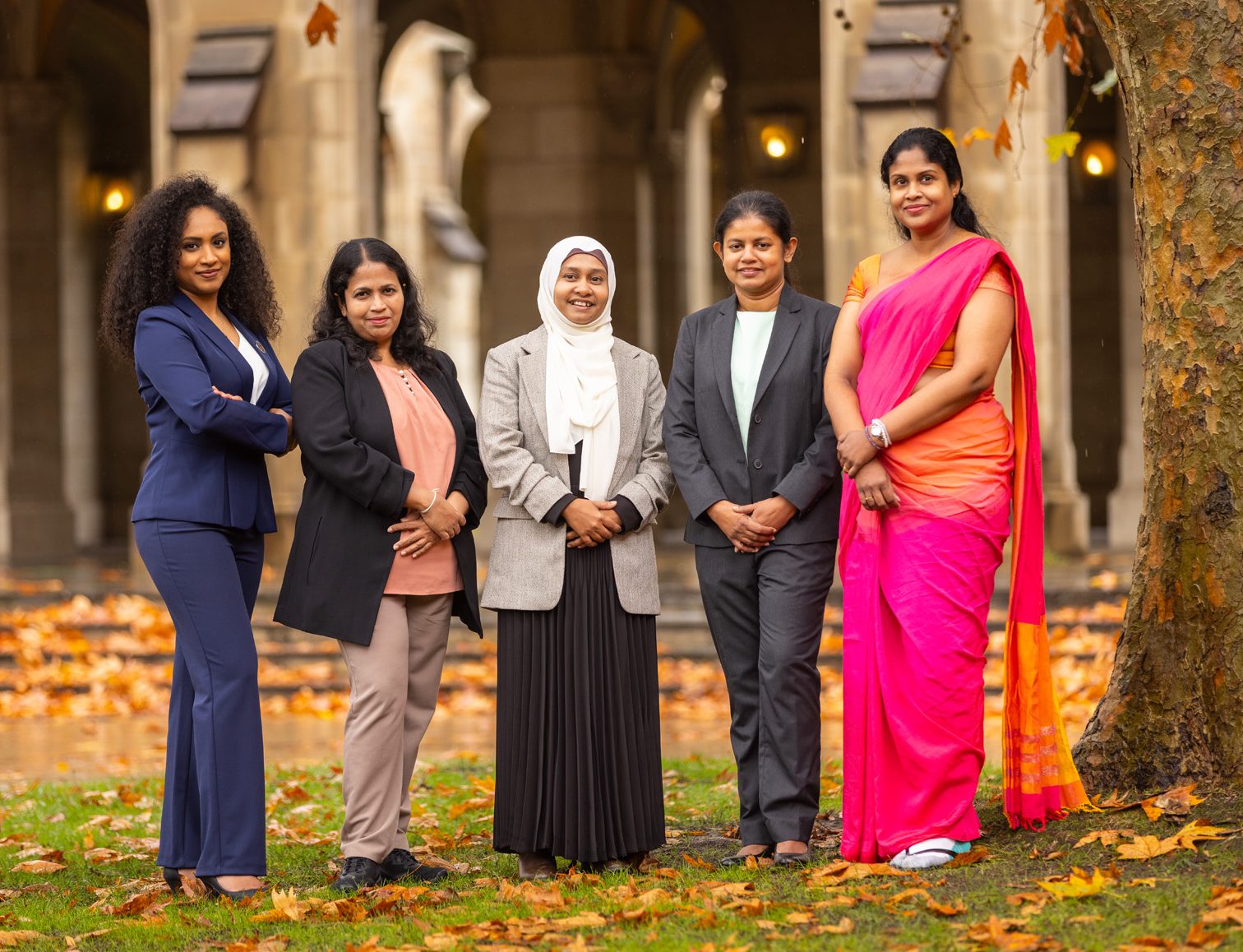
Harshika (right) pictured with other Australia Awards scholars from Sri Lanka in Melbourne.
Having now returned home following the scholarship, what are your plans to contribute to Sri Lanka’s development?
As an officer who is serving in an organisation operating at the grassroots level of the administrative set-up of Sri Lanka, I think our primary role is to manage community development in line with the social policy guidelines imposed by the central government. Thus, the knowledge I gained through the Australia Awards Scholarship enables me to implement policy initiatives of the government more effectively within the community and also be empowered by this new knowledge to identify and communicate the community expectations to higher authorities effectively. I also intend to use my knowledge of social policy to evaluate how effectively public resources and opportunities are used for community development. The knowledge I already have in public administration coupled with the newly acquired knowledge in social policy will help me to identify community issues and developmental requirements correctly and adopt the best remedial actions.
More specifically, I wish to introduce a logical methodology to select the beneficiaries for the current social services programs of the council. I intend to use the knowledge I gained related to social research and contemporary social issues to improve the capacity of field officers to carry out in-depth social status analysis to identify the most vulnerable members of society, rather than giving recommendations based merely on the monthly income of the family units. I also intend to introduce a proper monitoring and evaluation system to get an idea about the social impact created by the welfare initiatives of the council. In particular, I wish to deploy the best practices of the charity services of Australia, with suitable modifications to suit local needs, which I learnt during the internship period.
What advice would you give to anyone thinking of applying for an Australia Awards Scholarship?
Firstly, I think anyone who is applying for this Scholarship should have a clear, conscious view of the role he/she plays in the priority development sectors of Sri Lanka specified in the Scholarship guidelines. To my mind, the success of the application depends on the ability of the applicant to articulate a logical relationship between the gap identified in the proposed developmental initiative and the intended knowledge and skills to be acquired during the study period.
Secondly, I consider this Scholarship to be a life-changing opportunity for professionals based outside Colombo, who often miss out on the central developmental discussions. Through this Scholarship, I was given an immeasurable opportunity to be exposed to world-class education in my desired field of specialisation in social welfare and protection. Thus, I would like to urge the importance of applying for this Scholarship, especially for those who are serving on the periphery of the administrative setup.