

Alumnus contributing to Sri Lankan legal reform and policy development
Posted: 9 November 2026
This year marks the 75th anniversary of Australian Government scholarships for students from the Asia-Pacific region, with the first scholarship recipients travelling to Australia under the Colombo Plan in 1951. To commemorate this significant milestone, Australia Awards – South Asia & Mongolia launched the Alumni Impact Storytelling Competition to celebrate the outstanding contributions alumni have made to the development of their countries.
The competition invited alumni to showcase the impact they have created and reflect on how their Australia Awards experience has helped shape their personal and professional journeys.
Sri Lankan alumnus Ishan Rathnapala’s entry (below) placed in the ‘Commended’ category of the competition for its compelling account of how the knowledge gained through an Australia Awards Short Course has contributed to legal and policy reform in Sri Lanka. His story stood out for demonstrating a clear connection between learning and action, tracing the alumnus’s role in advancing landmark amendments to Sri Lanka’s Civil Procedure Code that introduced the use of email for serving legal documents. Judges also recognised the breadth of impact described in the submission, from strengthening digital capabilities among public officials and banking professionals to contributing to emerging policy discussions on digital assets, virtual currencies and the future of Sri Lanka’s digital economy.
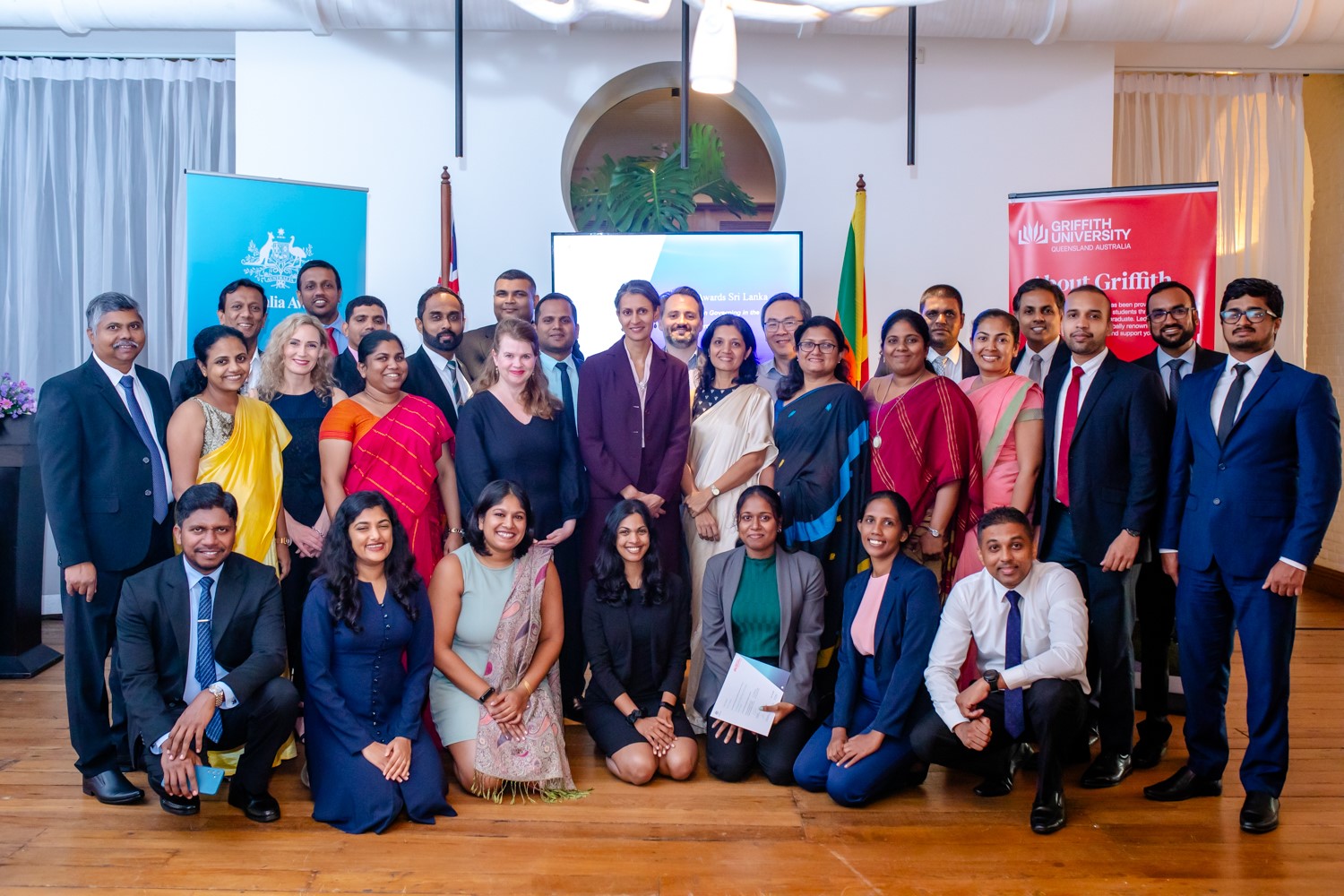
Ishan (back row, second from right) pictured with fellow Short Course participants, then Australia’s Deputy High Commissioner to Sri Lanka and the Maldives, Lalita Kapur (centre, in purple), and Australian High Commission staff at the certificate award ceremony.
I had the distinct privilege of completing the Australia Awards Short Course on Governing in the Digital Age at Griffith University in 2024. That experience marked a decisive turning point in my professional outlook. The course reshaped my understanding of public service, particularly through its emphasis on the convergence of technology and governance. It inspired me to reimagine how legal systems and administrative frameworks in Sri Lanka could evolve in the digital era.
Equipped with this enhanced perspective, I was honoured to be nominated by the Hon. Attorney General of Sri Lanka to review a critical amendment to the Civil Procedure Code of the country introduced in 2024. Drawing directly from the knowledge gained during the Short Course, especially on digital communication frameworks and data-driven policy designs, I was fortunate to actively contribute to shaping reforms in modernising procedural law relating to civil suits in Sri Lanka.
As a result, I am proud to have played a proactive role in the enactment of the Civil Procedure Code (Amendment) No. 43 of 2024. This landmark reform allows litigants to serve summons and court orders via email—an innovation introduced 135 years after the Civil Procedure Code came into force in 1889. It also transformed the format of legal proxies by mandating the inclusion of the email address of registered attorneys. These changes directly address inefficiencies in the judicial process, particularly the service of summons, which previously accounted for nearly 18% of the lifecycle of a civil case. This initiative represents a meaningful step towards a more efficient, accessible and technologically responsive justice system.
Motivated to further disseminate the knowledge gained from Australia, I advanced in academic engagements. I authored a research paper titled ‘Goodbye Postal Rule: De Novo Dimensions of Service of Summons in Civil Suits in Sri Lanka through Technological Frontiers’, which was presented at the International Conference on Advancements in Sciences and Humanities (SICASH) 2025, organised by the Sri Lanka Institute of Information Technology (SLIIT). The paper critically examined the evolution of service of summons in Sri Lanka and explored the future potential of integrating widely used messaging platforms into formal legal processes. It also incorporated comparative judicial insights from India and proposed progressive legal reforms for Sri Lanka. This work was recognised with the Best Presenter Award at the International Conference on Law and Justice 2025 and at SICASH 2025, and has been published on ResearchGate, receiving positive insights from legal and policy stakeholders.
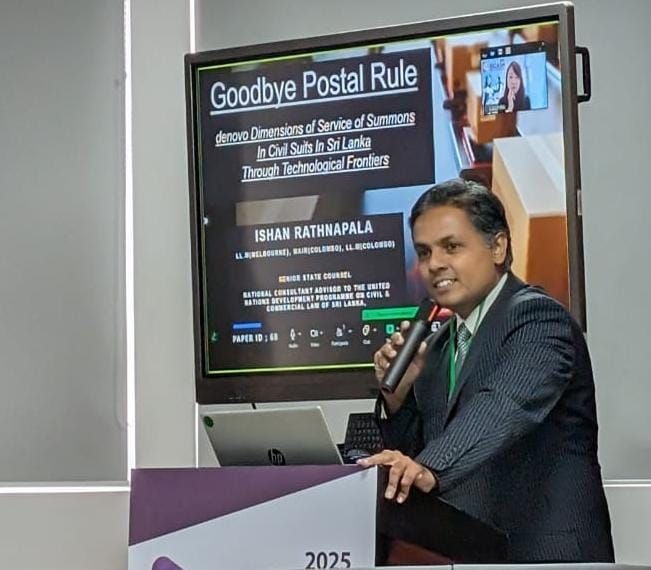
Ishan presenting his research paper at the 2025 SICASH Multiconference.
Beyond academia, I have actively contributed to capacity building within the public sector of Sri Lanka in sharing the experience gained from Australia. I was invited by the Ministry of Public Administration and Home Affairs to conduct training programs for investigative officers across Sri Lanka. These programs, delivered in structured batches, focus on the intersection of administrative law and emerging technologies. My sessions encapsulated areas such as artificial intelligence, digital evidence, forensic evidence on facial recognition, CCTV analysis and the evidentiary value of electronic communications (including SMS and WhatsApp). The investigative officers play a vital role in conducting preliminary investigations under the Establishments Code of the country, and equipping them with digital competencies is essential for modern governance.
In parallel, I have also shared my knowledge gained from Griffith University with the financial sector of Sri Lanka. I conducted a series of structured training programs for executive managers and branch managers of the National Savings Bank, addressing the legal dimensions of banking in the digital age. These sessions explored key legislative frameworks, including amendments made to the Evidence Ordinance relating to Bankers’ Books, the recognition of electronic signatures under the Electronic Transactions Act and the admissibility of electronic documents in civil proceedings. Through those sessions, I also emphasised the growing importance of regulating metadata in banking operations.

Ishan conducting training programs for executive managers and branch managers of the National Savings Bank. Photo courtesy of National Savings Bank.
Moreover, I am contributing to the National Law Clinics initiated in 2026 by the Ministry of Public Administration and Home Affairs. Accordingly, I engage with Divisional Secretaries across six regions of Sri Lanka, promoting the integration of technology into public administration. My focus in this endeavour has been on aligning legal frameworks with digital innovation to enhance efficiency, transparency and service delivery at the grassroots level.
In recognition of the growing challenges posed by digital financial systems, I have also been entrusted by the Hon. Attorney General to lead a collaborative initiative involving investigators, prosecutors, and stakeholders from licensed commercial and specialised banks. This prospective program will address emerging legal issues in the money lending sector, particularly those arising from e-commerce, cryptocurrency transactions and digital assets such as non-fungible tokens (NFTs). These developments often fall outside the conventional legal definitions of property and financial crimes in Sri Lanka. In response, I have engaged with the United Nations Development Programme and the Central Bank of Sri Lanka to develop a structured strategy aligned with the government’s ‘Digital Economy’ agenda set across 2025–2029.
In addition, I have been actively involved as a member of a stakeholder committee convened by the Ministry of Digital Economy to contribute to the development of a regulatory framework for virtual assets and virtual asset service providers. In this spirit, I am contributing to the formulation of a concept paper for the Government of Sri Lanka on this emerging theme in the digital age.
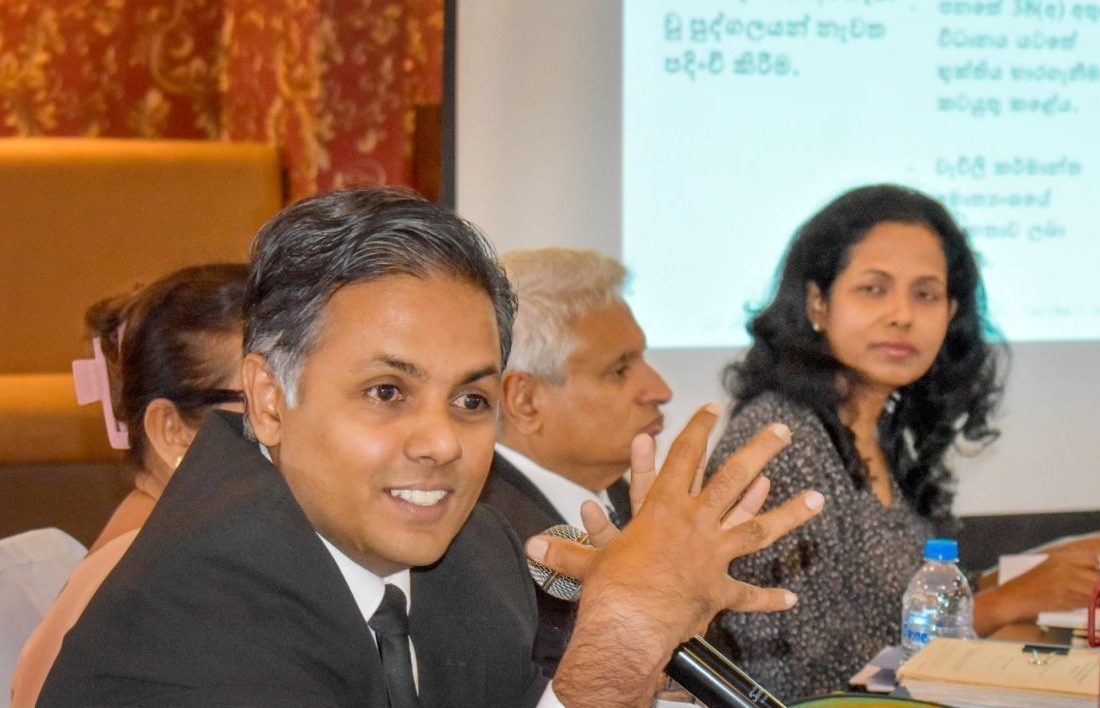
Ishan participating in the 2026 National Law Clinics initiative of the Ministry of Public Administration and Home Affairs.
These efforts are part of a broader national conversation on introducing cryptocurrency as a recognised form of legal tender in Sri Lanka through future legislative reforms.
The Australia Awards Short Course connected me to a global platform of professionals and mindsets of innovation. The insights gained from Australia continue to shape my contributions across legal reform, policy development and institutional capacity building in Sri Lanka.
There is still much to be executed, but the foundation has been firmly laid. I remain committed to advancing a digitally empowered legal and administrative system that serves the people of Sri Lanka with greater efficiency and inclusivity.