

Alumnus turning personal experience into opportunities for people with disability
Posted: 22 September 2026
This year marks the 75th anniversary of Australian Government scholarships for students from the Asia-Pacific region, with the first scholarship recipients travelling to Australia under the Colombo Plan in 1951. To commemorate this significant milestone, Australia Awards – South Asia & Mongolia launched the Alumni Impact Storytelling Competition to celebrate the outstanding contributions alumni have made to the development of their countries.
The competition invited alumni to showcase the impact they have created and reflect on how their Australia Awards experience has helped shape their personal and professional journeys.
Below is the story submitted by alumnus Tuan Mohammed Rushdi Cassim from Sri Lanka, who completed a Master of Disability Policy and Practice at Flinders University in 2024. Tuan’s entry was commended for demonstrating how lived experience, combined with education and professional expertise, can create meaningful opportunities for people with disability. Judges were particularly impressed by the clear link between his Australia Awards experience and tangible outcomes, including supporting people with disability into employment, engaging employers to create more inclusive workplaces, and advancing the use of assistive technology and AI to promote accessibility, independence and productivity.
As a fresh graduate, I started my first job full of hope and excitement. But within one week, I began losing my eyesight—and soon after, I lost my job too.
At that time, I was deeply worried that I might never be able to use a computer again, and losing access to employment left me frustrated and uncertain about my future.
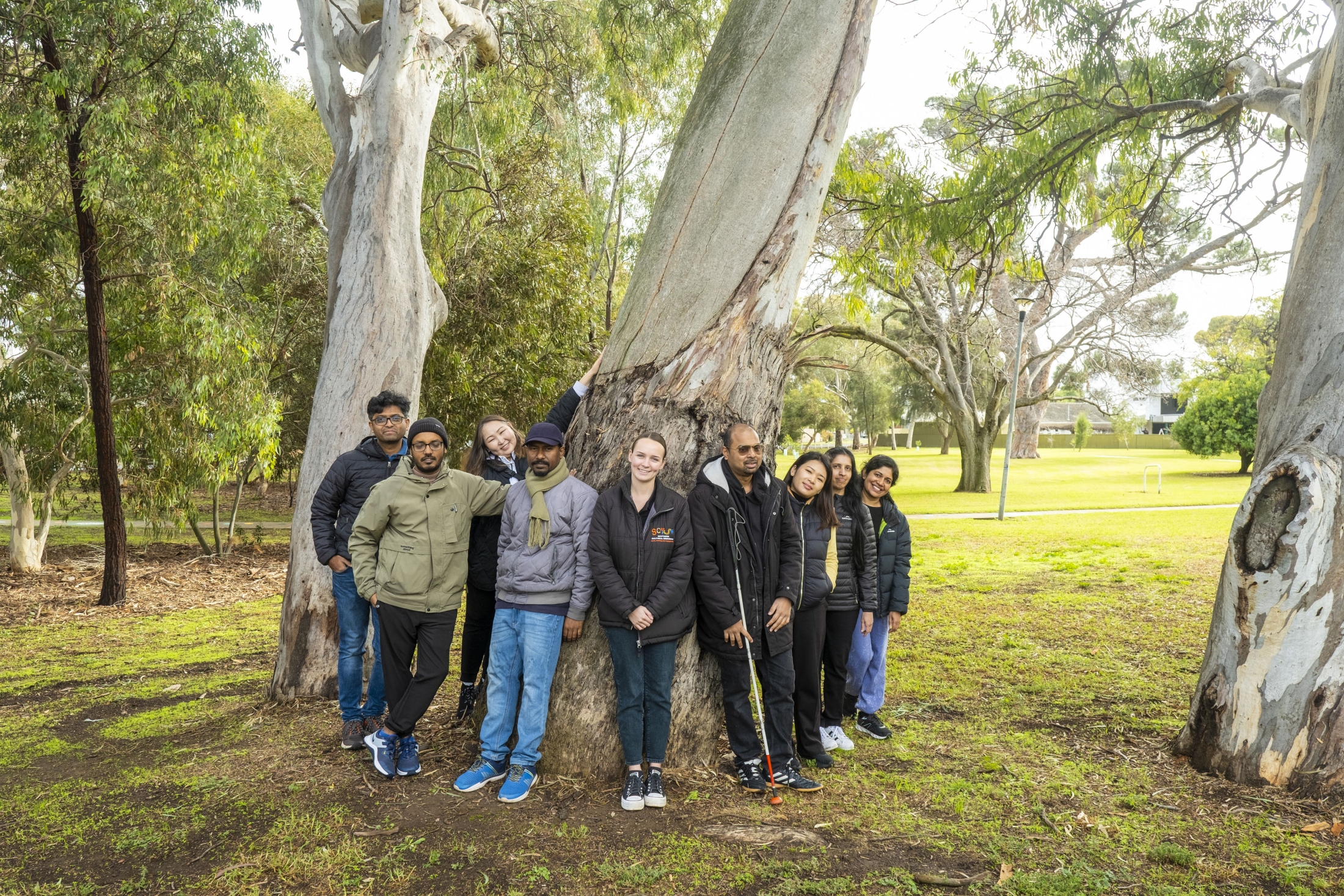
Tuan (fourth from right) with fellow Australia Awards scholars and the tour guide at the Warriparinga Wetlands in Adelaide during a NAIDOC Week engagement event, pictured beside an 800-year-old canoe tree.
Rehabilitation helped me move forward. I learnt to use a computer through sound rather than sight and to travel independently with a white cane. Slowly, I began to understand that my future had not ended, but I needed the right skills, support and confidence to rebuild it.
Those skills helped me return to work with a new understanding of how much practical support can change a person’s future. Later, I entered the corporate world as a Human Resources Learning and Development professional. I loved supporting young graduates through the internship program and helping them build practical and soft skills.
Working in HR made me see employment from both sides: as someone who had fought to return to work, and as someone now helping others prepare for it. While checking CVs and supporting recruitment, I rarely came across CVs from people with disability who were ready to enter corporate roles. That showed me a clear gap: many people with disability wanted to work, but they needed stronger skills, practical support and employers ready to recognise their potential.
That gap became the starting point of my Australia Awards plan: to study disability policy and practice in Australia, learn practical employment and assistive technology models, and return to Sri Lanka to adapt those learnings into skills-development and employment pathways for people with disability. Australia Awards accepted this plan, giving me the opportunity to pursue a Master of Disability Policy and Practice in Australia.
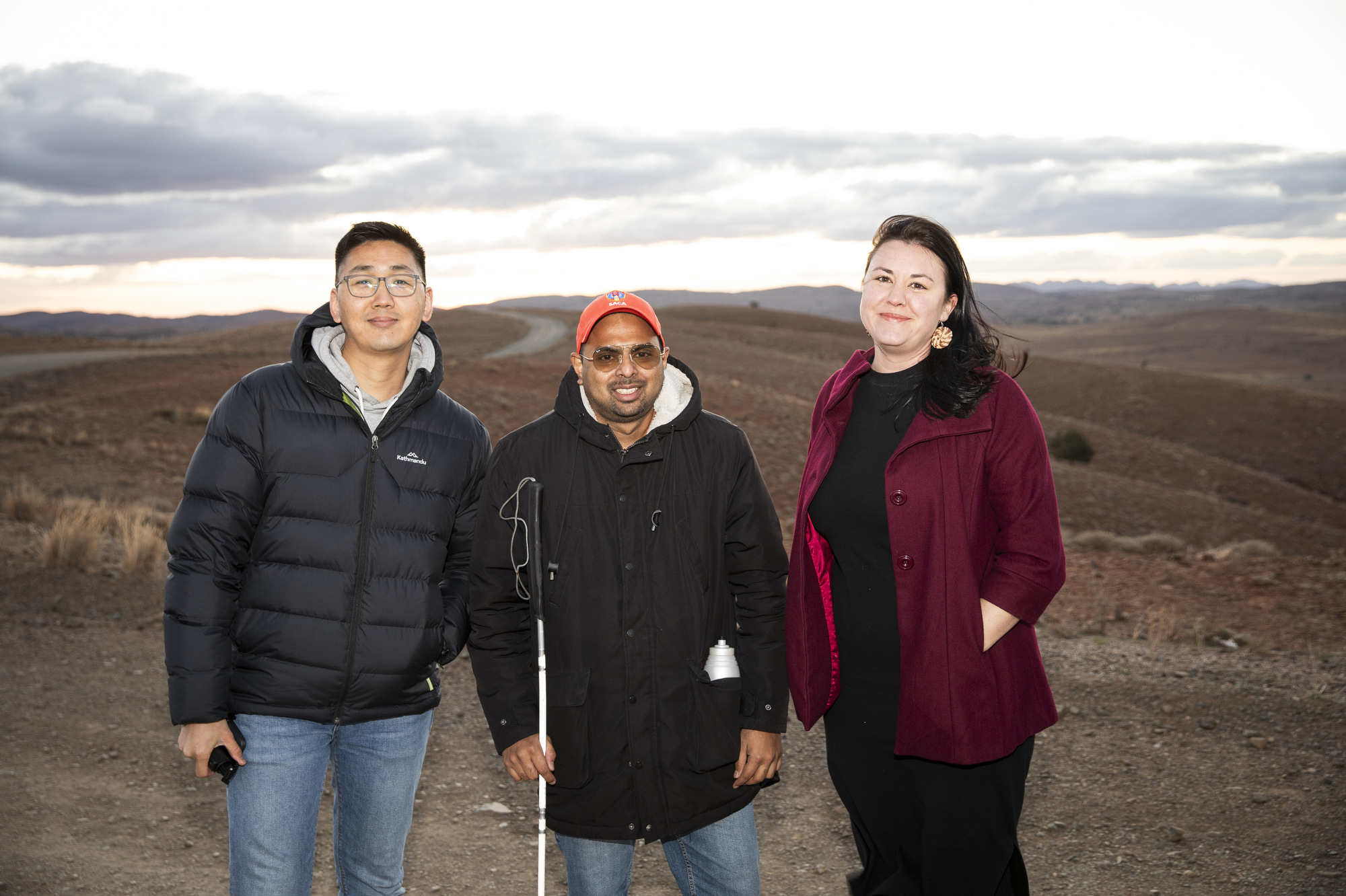
Tuan (centre) with fellow scholar Sergelen Tsetsegmaa from Mongolia and Alice Tamang, Australia Awards – South Asia & Mongolia’s Indigenous Engagement Adviser, during a scholar engagement visit to Ikara-Flinders Ranges National Park, South Australia.
When I went to Australia, I began a new chapter in my life. At Flinders University, I completed my master’s degree, which deepened my understanding of disability, inclusion, policy and practice. Support from the university, my lecturers, International Student Services and Australia’s multicultural society helped me thrive academically and rebuild my independence. I was able to travel, volunteer, study, work, play sport and build a life in a new country. As an international student, I also represented South Australia in blind cricket and received state colours.
What I learnt in the classroom became more meaningful when I saw inclusion being practised in real workplaces and disability services. I worked with six different organisations connected to disability inclusion. One key experience was working with Jigsaw Australia. I learnt why its disability employment model is so respected: it prepared people for work through structured training, soft skills, direct work experience, long-term support and a reported 91% employment-retention outcome.
At See Differently, I used, tested and taught assistive technologies for people who are blind or vision impaired. One moment stayed with me deeply. The first time I wore smart glasses that could read documents and describe the environment around me, I was in tears. It showed me what becomes possible when technology gives a blind person access to information, independence and dignity.
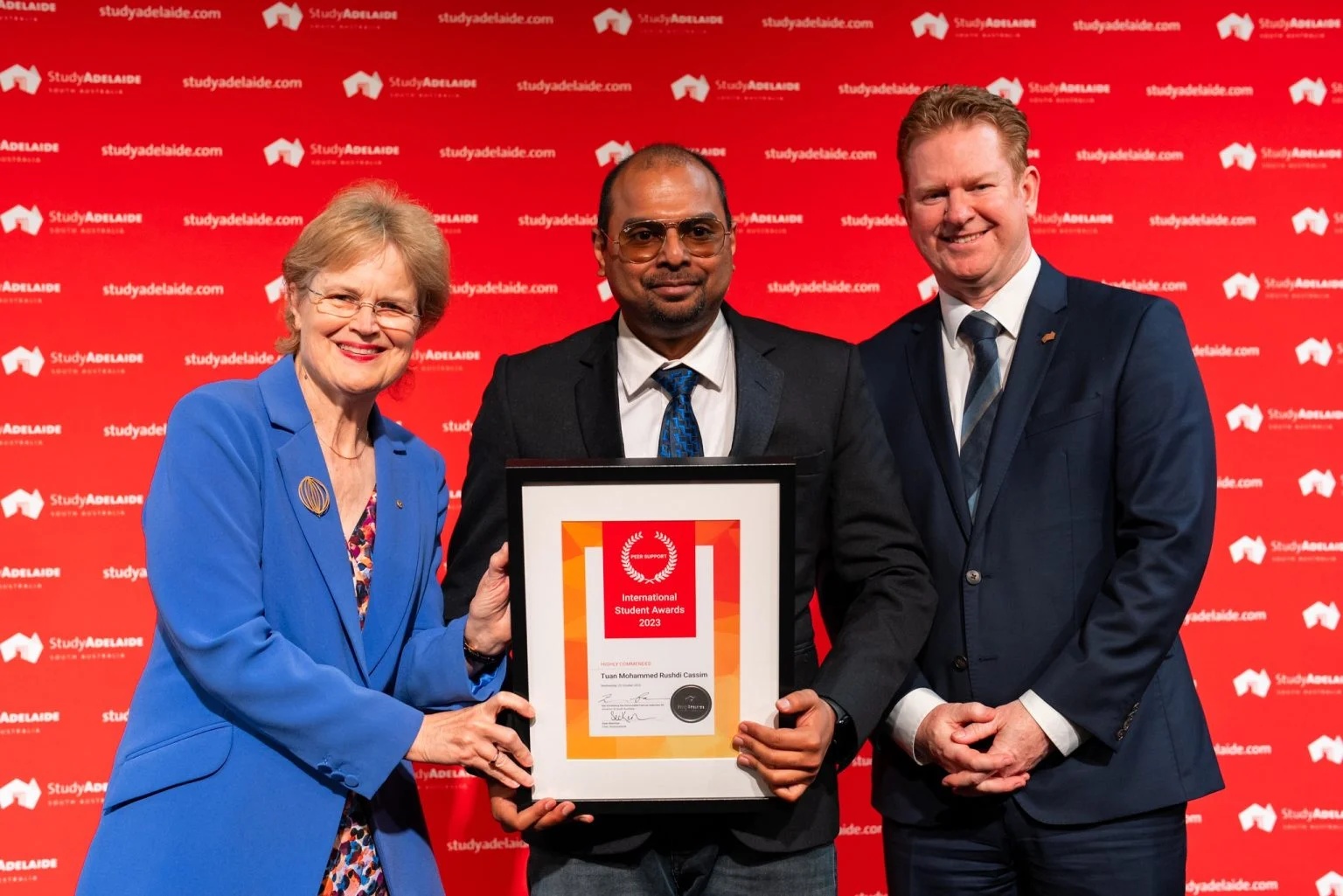
Tuan (centre) receives recognition at the 2023 StudyAdelaide International Student Awards for his outstanding achievements as an international student in Australia. Learn more. Photo credited to: StudyAdelaide South Australia.
By the time I returned to Sri Lanka, I was not the same person who had once feared that losing eyesight would end my future. I returned academically stronger, professionally stronger and personally more confident, with a clearer purpose to empower people with disability in Sri Lanka.
Returning home was the real test of turning what I had learnt in Australia into something practical for Sri Lanka. I knew I could not simply copy the models I had learnt there. In Australia, many people with disability are supported by stronger rights-based systems and workplace practices. In Sri Lanka, I saw a greater need for self-advocacy: confidence to speak about strengths, explain support needs and ask for reasonable adjustments. Because I had lived that journey myself, I adapted what I learnt to focus on self-advocacy and practical employer awareness.
As the Consultant, Engagement and Inclusion at BConnected’s BEmpowered initiative, I worked directly with people with disability, supported their skills development and helped create pathways into corporate employment. We supported participants to build confidence, practise teamwork, improve communication and prepare for real employer expectations. At the same time, I conducted disability awareness sessions for organisations, helping employers understand accessibility, inclusion and practical ways to support people with disability at work. Through BEmpowered, we engaged more than 100 organisations, supported more than 30 people with disability into corporate employment and helped more than 45 people with disability develop employability skills.
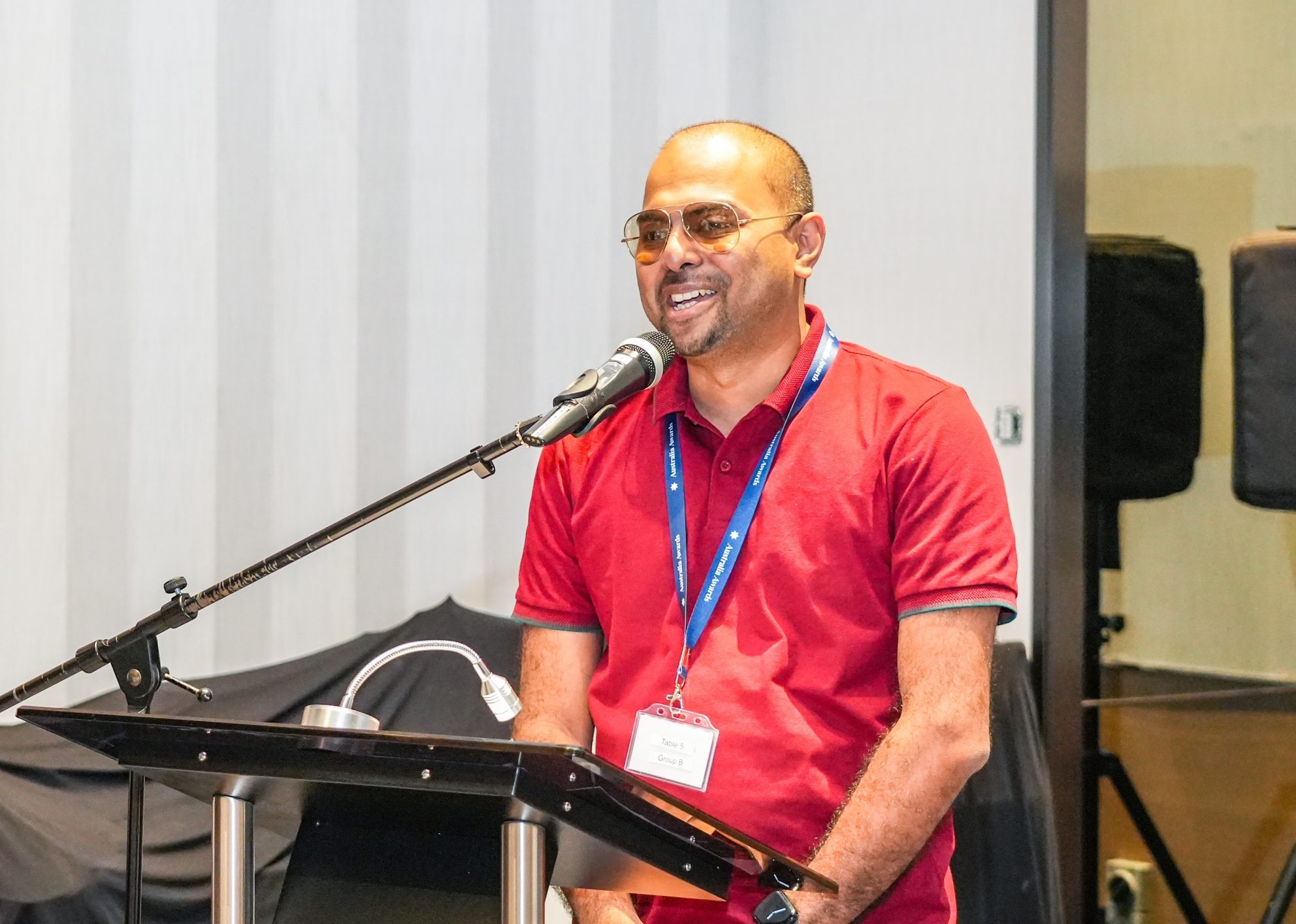
Tuan delivering the closing remarks at the 2025 Regional Alumni Workshop in Colombo, Sri Lanka.
For me, these were not just numbers. I will never forget when the mother of a person with disability we supported into employment blessed me after seeing her daughter enter the workplace. Her words still remind me why this work matters.
The lessons I learnt through BEmpowered did not remain only in Sri Lanka. I was selected as a speaker at the World Blindness Summit in Brazil, where I shared employment models and practical approaches for opening pathways for people with disability.
Over time, my work expanded from employment inclusion into how technology can improve independence and productivity for people with disability. Today, as a Global Disability Inclusion and AI Productivity Specialist at ImpactEra, a Microsoft Global Training Partner, I work across the United Arab Emirates, South Asia, Africa and beyond. The cultural understanding I developed in Australia, the assistive technologies I learnt and the employment models I adapted in Sri Lanka now support this global work. I have trained more than 100 educators, corporate leaders and learners on how technology and AI can improve accessibility, independence and workplace productivity.
Australia Awards showed me that the right support, given at the right time, can turn personal experience into a responsibility to serve others. That is the responsibility I now carry: to open doors for other people with disability, so they too can be recognised for their ability, supported to grow and given the chance to shape their own future.